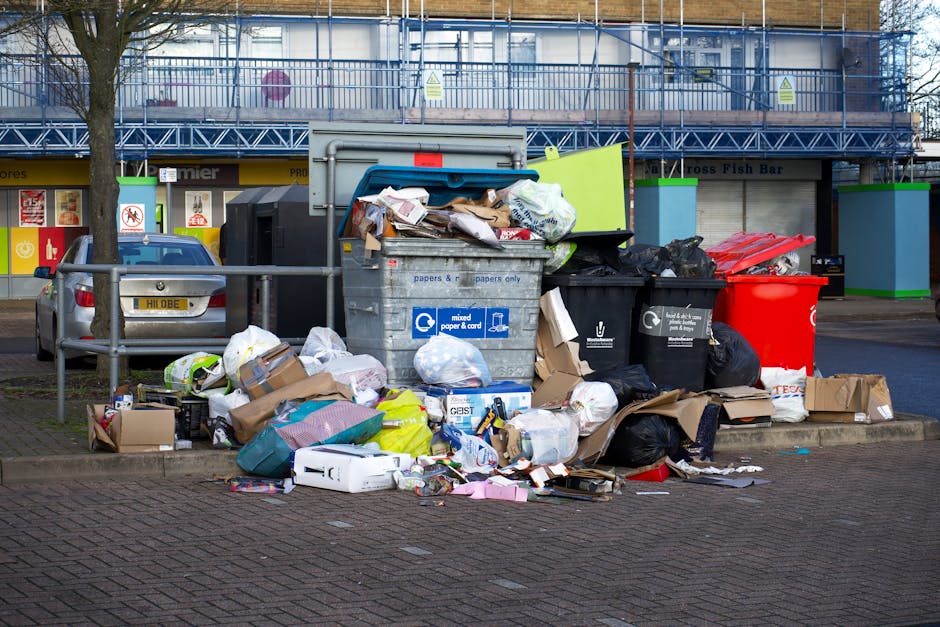
What to know about rubbish permits for Fitzrovia landlords
If you rent property in Fitzrovia, rubbish can turn from a small nuisance into a very real problem fast. A pile of old furniture in a hallway, bags left near a front entrance, or builders' waste sitting outside a flat for too long can create complaints, fines, and some awkward conversations with tenants. So, What to know about rubbish permits for Fitzrovia landlords is not just a paperwork question; it is about keeping a property compliant, presentable, and easy to manage.
In practical terms, landlords need to understand when a rubbish permit may be required, what kinds of waste are involved, who is responsible, and how to arrange collections without tripping over local rules. Fitzrovia is busy, compact, and often tight for access. That changes the game a bit. Let's walk through it properly.
Table of Contents
- Why rubbish permits matter for Fitzrovia landlords
- How rubbish permits and collections work
- Key benefits and practical advantages
- Who this is for and when it makes sense
- Step-by-step guidance
- Expert tips for better results
- Common mistakes to avoid
- Tools, resources and recommendations
- Law, compliance, standards and best practice
- Options, methods and comparison table
- Case study or real-world example
- Practical checklist
- Conclusion
- Frequently asked questions
Why rubbish permits matter for Fitzrovia landlords
Fitzrovia has a particular rhythm. Streets are busy, loading space can be limited, and residential buildings often sit close to shops, offices, and constant foot traffic. That means rubbish left in the wrong place tends to be noticed quickly. A landlord who ignores waste handling can end up dealing with complaints from neighbours, management companies, tenants, or even enforcement action if the waste is placed improperly.
The word "permit" gets used loosely, which is part of the confusion. In some situations, landlords mean permission to place a skip or skip bag on the street. In others, they mean authorisation for a bulky waste collection, or proof that the waste carrier is operating correctly. These are different things, but they all matter. In a tightly packed central London area, people often discover that a simple clearance becomes more complicated than expected. Bit of a headache, really.
Landlords also have a duty of care around waste. If you are responsible for arranging removal after a tenant moves out, a flat is refurbished, or furniture is dumped during an end-of-tenancy clear-out, you need to know who is handling the waste and where it ends up. If you are not careful, the landlord can be left holding the bag, and nobody enjoys that conversation.
For broader support with empty properties, mixed items, or routine clearance work, many landlords look at services such as house clearance or flat clearance when a property needs to be cleared quickly and properly.
How rubbish permits and collections work
First, it helps to separate the moving parts. A rubbish permit is not one single universal thing. Depending on the job, it may involve permission to place a container, permission to occupy part of the public highway, or approval from a building's management for access and loading. Sometimes there is no formal permit at all, but there still needs to be proper coordination.
For landlords, the most common scenarios are usually these:
- Skip or container placement: if waste needs to sit on a public road or pavement, a permit may be required.
- Bulky item removal: sofas, wardrobes, mattresses, and similar items are often removed through a collection service rather than left outside.
- Commercial or mixed-use premises: buildings with shops, offices, or communal areas may have extra restrictions on where waste can be stored and when it can be moved.
- Refurbishment waste: plasterboard, timber, tiles, packaging, and old fixtures may need specialist handling.
In plain English, the more your waste sits in shared or public space, the more likely you are to need permission or formal arrangements. If the clearance is happening inside a block, there may also be building rules on lift use, service entrances, timed access, or protection for common areas. Those details matter more than people expect.
It also helps to think about the route the waste takes. Is it going to a licensed facility? Is recyclable material being separated? Is the contractor insured? Those are not side questions. They are central to whether the job is done properly.
Key benefits and practical advantages
Getting rubbish permissions and waste arrangements right does more than keep people happy. It saves time, reduces friction, and lowers the chance of a property issue spiralling into something more expensive.
- Less risk of fines or complaints: rubbish left on the street or in communal areas can trigger problems very quickly.
- Smoother tenancy turnover: end-of-tenancy clearances can be handled without delays.
- Better presentation: a clean entrance or courtyard makes a property feel cared for.
- Reduced damage risk: proper handling avoids scratches, lift damage, blocked corridors, and accidental mess.
- Clearer accountability: you know who is responsible for the waste at each stage.
There is also a softer benefit that landlords sometimes overlook. When rubbish is managed well, tenants tend to trust the property more. That sounds a little obvious, but it matters. People notice when a block smells stale, when the bin store overflows, or when renovation debris lingers for days. They notice the opposite too.
If you are comparing approaches for mixed waste, a practical service such as waste removal can help you keep things moving without having to manage every item separately.
Expert summary: For Fitzrovia landlords, the real value of rubbish permits and proper clearance planning is not only compliance. It is keeping properties usable, neighbours calm, and turnover costs under control.
Who this is for and when it makes sense
This topic is most relevant if you are a landlord, letting agent, block manager, or property owner handling waste from rented homes in Fitzrovia. It also applies if you manage a small portfolio and are trying to standardise how you deal with rubbish after move-outs or refurbishments.
You are most likely to need to think about permits and disposal planning when:
- a tenant leaves behind bulky items or black bags
- you are replacing furniture between lets
- you are stripping out a flat for refurbishment
- the building has limited bin storage
- the street does not allow easy parking or loading
- neighbours or the concierge have already raised complaints
Landlords with older conversions or smaller flats often run into the same pattern: one unit generates a surprising amount of waste, but the available space is tiny. The pile grows near the door. Someone assumes it will be collected "later". Later turns into several days. You know the rest.
This is also relevant if you are dealing with specialist waste streams. For example, broken furniture, garden cuttings from communal outdoor areas, loft items, or builder's waste each need slightly different treatment. In those cases, services like furniture disposal, garden clearance, loft clearance, and builders waste clearance can be more practical than a general one-size-fits-all approach.
Step-by-step guidance
If you want a clean, low-stress process, it helps to break it into simple steps. No drama, no guesswork.
- Identify the waste type. Is it general household rubbish, furniture, renovation debris, or mixed waste? This affects the handling method.
- Check where the waste will sit. If anything is going on a public road, in a communal area, or near shared access points, permission may be needed.
- Review building rules. Some blocks have strict collection windows, loading restrictions, or access procedures.
- Choose the right service. A flat clearance may suit a full void property. Waste removal may suit mixed rubbish. Furniture disposal can work well for bulky items only.
- Confirm insurance and responsibility. Make sure the contractor is clear about liability, access protection, and waste transfer.
- Arrange the timing carefully. Try to align the collection with tenancy changeover, refurbishment work, or key handover.
- Keep records. Even basic notes on what was removed, when, and by whom can save a lot of back-and-forth later.
It sounds straightforward, and mostly it is. The trouble starts when step two gets skipped. That is usually where things go sideways.
For landlords who want a property cleared room by room, home clearance is often a sensible option. For smaller units, flat clearance can be the better fit because it matches the space and access issues that come with Fitzrovia living.
Expert tips for better results
After enough clearance jobs, the patterns become obvious. A few small decisions make the whole process smoother.
- Book earlier than you think you need to. In central London, access windows can disappear fast.
- Photograph the waste before removal. It helps with tenant disputes, inventory issues, and internal records.
- Separate reusable items where possible. It can reduce disposal pressure and make the job more efficient.
- Measure awkward furniture before collection. A wardrobe that looks manageable in a hallway can be a nightmare at the stair bend.
- Warn neighbours or building staff if access will be busy. A quick heads-up goes a long way.
- Ask how the waste is handled. Responsible disposal and recycling should be part of the conversation, not an afterthought.
One small thing that helps a lot: leave a clear route. It sounds almost too basic to mention, but a corridor full of shoes, bikes, or plant pots can slow everything down. That extra 10 minutes turns into 30. Then somebody is sighing in the hallway. Not ideal.
If sustainability matters to your property strategy, look for waste handling that supports sorting and recycling. A useful starting point is recycling and sustainability, especially if you want to keep disposal decisions aligned with better environmental practice.
Common mistakes to avoid
Most waste-related problems are avoidable. Really. They usually come from rushing, assuming, or leaving details to chance.
- Assuming street placement is always allowed: it often is not, or not without permission.
- Leaving rubbish out too early: this invites complaints, weather damage, and sometimes pests.
- Using the wrong type of service: a general collection is not always suitable for builder's waste or large furniture.
- Not checking insurance: if a wall, lift, or floor is damaged, you will want clarity on responsibility.
- Forgetting about communal rules: blocks often have stricter processes than individual houses.
- Mixing waste streams carelessly: recyclable material, bulky waste, and hazardous items should not all be thrown together.
A surprisingly common mistake is underestimating how long the job takes once the waste starts moving. One tenant leaves a sofa, two chairs, some bags, and a half-broken shelf. Suddenly there is more volume than planned, and the booking is no longer enough. Happens all the time.
Tools, resources and recommendations
You do not need a complicated toolkit, but a few practical things help landlords stay organised.
- Inventory photos: good for tenancy records and end-of-let evidence.
- Basic measurement notes: useful for bulky items and access planning.
- A simple clearance checklist: stops jobs from being rushed.
- Keys, access codes, and building instructions: make sure these are ready before the collection window.
- Waste categorisation notes: separate furniture, household rubbish, and refurbishment debris.
For landlords managing multiple properties, it is also worth keeping a reliable relationship with a service provider that understands local access and timing constraints. If you need help with business-oriented waste handling across more than one property or mixed-use site, business waste removal may be relevant, especially where regular collections are part of the plan.
And if you are working through a void property that needs to be stripped back before relaunch, house clearance can be a cleaner fit than arranging one-off item removal over and over again.
Law, compliance, standards and best practice
This is the part where landlords need to be careful, because waste rules are not just about convenience. In the UK, waste should be managed by suitable and authorised parties, and landlords still need to take reasonable steps to ensure disposal is lawful and traceable. The exact permit or permission issue depends on what is being placed, where it is being placed, and whether public space or private property is involved.
Best practice usually means:
- using a properly insured waste carrier
- keeping a record of what was removed
- checking whether a skip or container needs permission for placement
- avoiding obstruction of pavements, exits, or fire routes
- making sure the site stays safe for tenants, staff, and neighbours
Landlords should also be cautious about hazardous or specialist waste. Old paint, sharp fixtures, electrical items, and contaminated materials should not be treated like ordinary rubbish. If in doubt, treat it as a separate issue and ask for clear handling advice.
There is also a practical health and safety angle. A cluttered stairwell or blocked entrance is a trip hazard. A heavy item left in the wrong place can become an injury risk. To be fair, these are the problems that seem minor right up until someone hurts themselves.
For operational peace of mind, it helps to work with a provider that is transparent about handling, safety, and responsibility. If you want to understand how a company approaches these areas, pages such as health and safety policy, insurance and safety, and terms and conditions can be useful to review before booking.
Options, methods and comparison table
Landlords usually have a few ways to handle waste. The right choice depends on access, volume, and how quickly the property needs to turn around.
| Option | Best for | Advantages | Limitations |
|---|---|---|---|
| Permit-led skip placement | Larger waste volumes with space outside | Good for substantial clear-outs, convenient if loading is ongoing | May need permission, can take up street space, not ideal in tight streets |
| Scheduled waste removal | Mixed rubbish and time-sensitive clearances | Fast, flexible, less visible clutter, simpler for landlords | May need careful sorting and clear instructions |
| Flat or house clearance | Whole-property vacates or end-of-tenancy clear-outs | Efficient, useful for bulky items, often best for voids | Requires access planning and a clear scope |
| Furniture-only disposal | Sofas, tables, mattresses, wardrobes | Simple and focused, good when items are bulky but limited in number | Not suitable for mixed or building waste |
In practice, many landlords end up using a mix. For instance, a flat might need furniture clearance for the living room, then a separate waste removal collection for bags and smaller items. That is normal. It is not a sign of poor planning; it is just how real properties work sometimes.
Case study or real-world example
A Fitzrovia landlord inherited a one-bedroom flat after a long tenancy. The tenant had moved out, but left behind a broken bed frame, a worn sofa, several boxes, and a small pile of mixed rubbish in the hallway. On paper, it sounded like a quick tidy-up. In reality, access was narrow, the building had strict quiet hours, and the hallway had to stay clear for neighbours coming and going.
The landlord first checked the building rules, then booked a removal service that could handle both bulky furniture and bagged waste in one visit. The key thing was timing. The collection was arranged for a window when access was easiest, and the hallway was kept clear beforehand. The team removed the items, and the flat was back to a workable state the same day. Not glamorous. Just efficient.
The lesson was simple: in a compact London property, the success of a clearance job often comes down to coordination, not brute force. Good planning saved time, reduced complaints, and meant the landlord could move on to re-letting the flat without delay.
Practical checklist
Use this checklist before you arrange rubbish clearance or worry about permits.
- Confirm the type and volume of waste
- Check whether anything will sit on a public road or in a shared area
- Review building access rules and quiet hours
- Photograph items before removal
- Separate furniture, general rubbish, and refurbishment waste
- Confirm insurance and responsibility with the provider
- Arrange the collection for the right time of day
- Keep a simple record of the removal
- Check that common areas are left clean and safe
- Make sure reusable or recyclable items are handled appropriately
If you are dealing with a property that has extra waste in the loft, garage, or outside space, do not rush it. A little patience saves a lot of mess.
Conclusion
For Fitzrovia landlords, rubbish permits are really about control, clarity, and keeping a property running smoothly in a busy part of London. Whether you are handling a tenant move-out, a refurbishment, or a one-off bulky waste problem, the main question is not simply "Can I leave this here?" It is "What is the safest, cleanest, and most compliant way to get this gone?"
Once you understand the distinction between street permissions, building access rules, and proper waste handling, the whole process becomes less stressful. You do not need to overcomplicate it. You just need a sensible plan, a clear timeline, and the right support where needed. That is usually enough.
Get a free quote today and see how much you can save.
Frequently Asked Questions
Do Fitzrovia landlords always need a permit for rubbish removal?
Not always. It depends on where the waste is stored and how it is collected. If a skip, container, or waste pile will be placed on a public road or pavement, permission may be needed. If everything is removed directly from private property, the permit issue may not apply, but other rules still do.
What is the difference between a rubbish permit and waste removal?
A permit is permission to place or manage waste in a certain location, usually in public or shared space. Waste removal is the actual collection and disposal of the items. Landlords often need to think about both, because one affects the other.
Who is responsible for rubbish left by a tenant?
That depends on the tenancy agreement and the situation, but in practice landlords often have to arrange removal to get the property back into usable condition. If the tenant is responsible contractually, recovery may be a separate matter. Still, the immediate problem usually needs solving first.
Can I leave bulky items outside a flat in Fitzrovia?
Usually not without checking access rules, building policies, and any relevant permission. Bulky items left outside can block common areas or attract complaints. It is better to arrange a collection time and keep items inside until then if possible.
What kind of waste needs special handling?
Builder's waste, electrical items, sharp fixtures, contaminated materials, and some renovation debris may need separate treatment. Mixed loads can be handled, but they should be assessed properly first so nothing is disposed of carelessly.
Is a skip always the best option for landlords?
No. Skips are useful for larger jobs, but they are not always practical in Fitzrovia because of access, street space, and permit considerations. For smaller or more urgent jobs, direct waste removal may be more suitable.
How can I reduce waste costs between tenancies?
Plan earlier, separate reusable items, avoid emergency bookings where possible, and choose the right service for the actual volume of waste. A full-property clearance is often more efficient than multiple small jobs, but not every property needs that.
What records should a landlord keep after rubbish removal?
Keep basic notes of the collection date, what was removed, who carried it out, and any relevant photos. This helps with tenant disputes, insurance questions, and internal property management records.
Can rubbish permits affect refurbishment timing?
Yes, absolutely. If street access, container placement, or building rules are not sorted out early, the whole project can slow down. That is why waste planning should sit alongside the refurbishment schedule, not behind it.
How do I know if a waste company is suitable?
Look for clear communication, insurance, sensible handling of different waste types, and a practical approach to access. You should feel that they understand the realities of London property management, not just the removal itself.
What is the safest approach for shared entrances and hallways?
Keep them clear, protect floors where needed, and schedule removal so items spend as little time there as possible. Shared areas need extra care because one small obstruction can inconvenience several people at once.
Where can I learn more about the company's standards and policies?
You can review pages such as about us, insurance and safety, health and safety policy, recycling and sustainability, and contact us for more context before booking.
In the end, good rubbish planning is one of those quiet landlord tasks that only gets noticed when it goes wrong. Get it right, and the property feels calmer, cleaner, and easier to manage. And that, honestly, makes everything else simpler.