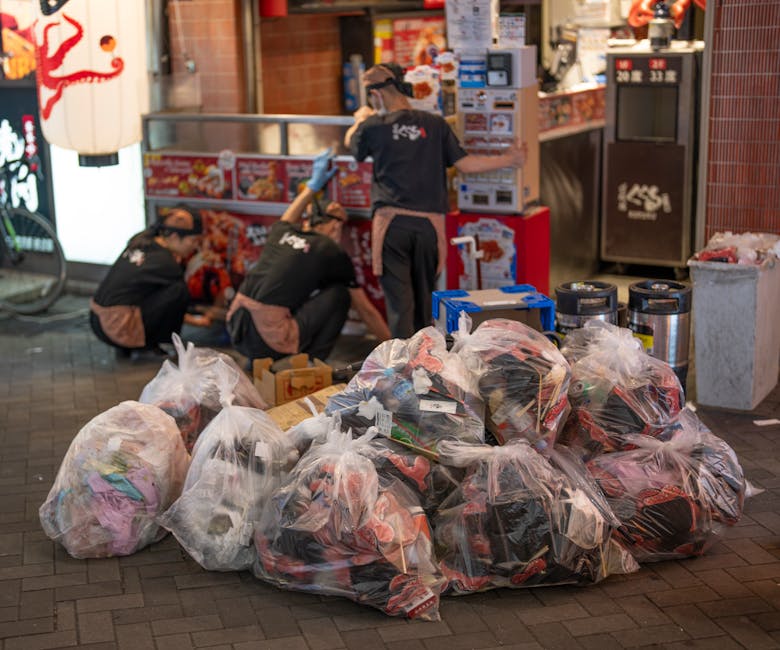
Business rubbish servicing Fitzrovia restaurants and offices: a practical guide for busy local premises
If you run a restaurant, cafe, office, or mixed-use workspace in Fitzrovia, rubbish has a habit of appearing at the worst possible moment. A delivery day leaves cardboard everywhere. A lunch service creates food waste faster than the bin can breathe. An office clear-out suddenly turns up broken chairs, old monitors, and a pile of stuff no one quite claims responsibility for. That is exactly where Business rubbish servicing Fitzrovia restaurants and offices becomes useful: it keeps the place moving, tidy, and presentable without making your team do all the heavy lifting.
This guide explains what the service actually covers, how it tends to work in practice, what to watch for, and how to choose a setup that fits the pace of a Fitzrovia business. You will also find a checklist, a comparison table, and a realistic example based on the sort of day-to-day mess businesses here deal with. Truth be told, most places do not need drama. They need a clean back-of-house area, a reliable collection routine, and fewer surprises.
Why Business rubbish servicing Fitzrovia restaurants and offices Matters
Fitzrovia is busy, compact, and rarely forgiving if waste starts to build up. Restaurants need clear prep areas, fast turnover of packaging, and safe handling of food-related rubbish. Offices need a tidy environment that supports staff, visitors, and clients without the awkward sight of overflowing bins or broken furniture waiting by the door. In both cases, rubbish is not just an eyesore. It affects workflow, hygiene, safety, and reputation.
Let's face it: most customers and visitors do not separate a business from its waste area. If the bin store smells, the loading corner looks chaotic, or bags are left out too long, people notice. Staff notice too. A messy waste process tends to create a messy workplace culture, and that can snowball in a pretty ordinary way. One forgotten pickup becomes two. Then somebody stacks boxes in the corridor because there is nowhere else to put them. Not ideal.
For restaurants, waste pressure can be even more immediate. Food scraps, grease-contaminated packaging, cardboard from supplies, broken kitchen items, and glass all need handling properly. Offices have a different pattern: paper, packaging, old fittings, e-waste, and furniture removals often arrive in bursts rather than a steady stream. Either way, a responsive service helps keep your operation smooth.
Expert summary: The best business waste setup is the one your team can follow on a normal Tuesday, not just on a perfect day. If the process feels awkward, people stop using it properly.
How Business rubbish servicing Fitzrovia restaurants and offices Works
Most business rubbish servicing follows the same basic rhythm. You identify the type and volume of waste, arrange a collection or clearance slot, and the team removes it with as little disruption as possible. The real difference is in the detail: access, timing, sorting, lifting, and whether the rubbish is mixed or already separated.
For restaurants, the service may need to fit around service hours. Early morning is common, though some sites prefer late evening after the last table is cleared and the kitchen has been reset. Offices often want quiet, narrow time windows too, especially in shared buildings where lifts, receptions, and corridors are all in use.
In practical terms, a good rubbish servicing arrangement usually includes:
- an initial assessment of what needs removing
- clear guidance on acceptable waste streams
- a collection time that suits the business
- safe loading and transport
- recycling or disposal handled appropriately
- proof of what was removed, where needed for records
Some businesses use a regular scheduled service. Others book one-off removals during refurbishments, relocations, stock changes, or seasonal resets. A restaurant may need weekly support for packaging and back-of-house waste, while an office might only need a big clear-out after a move or fit-out. Different needs, different rhythm.
If your waste includes bulky items, internal moves, or dismantling, it can be sensible to pair rubbish servicing with an office clearance or broader waste removal service. That keeps the process tidy rather than piecemeal.
Key Benefits and Practical Advantages
The obvious benefit is cleanliness, but the practical value goes further than that. Businesses in Fitzrovia often work in tight footprints, with limited storage and high foot traffic. A dependable rubbish service helps protect the parts of your operation people actually see and use every day.
- Better presentation: A clean back-of-house and tidy office feel more professional instantly.
- More usable space: Storage rooms, corridors, and kitchen corners stop becoming accidental dumping grounds.
- Lower stress for staff: Nobody enjoys playing bin Tetris at 7 a.m. before opening.
- Safer working areas: Fewer trip hazards, less clutter, and less awkward lifting by employees.
- Improved operational flow: Deliveries, collections, and cleaning all become easier to manage.
- More consistent standards: Regular servicing keeps waste from building up between busy periods.
There is also a cost-control angle. Not always obvious at first, but real. When waste is handled badly, staff spend time sorting it out, moving it around, and trying to make space that should have been available already. That time adds up. So does the risk of damage to fixtures, blocked access, or accidental contamination of recyclable material.
For restaurants in particular, a structured waste process can support hygiene routines without turning them into a huge production. For offices, it helps during refurbishments, desk changes, or staff turnover when piles of outdated equipment appear out of nowhere. A bit annoying, yes. Very normal, also yes.
Who This Is For and When It Makes Sense
This kind of service is not just for large firms with permanent facilities teams. It is often most useful for businesses that do not have enough room, time, or internal resource to manage rubbish properly on their own.
You are likely to benefit if you run:
- a restaurant, cafe, bar, deli, or takeaway with regular food and packaging waste
- a small or medium office with limited storage
- a co-working space with frequent tenant turnover
- a showroom or client-facing premises where appearance matters
- a business undergoing a fit-out, relocation, or refurbishment
- a hospitality venue that needs occasional bulky item removal
It also makes sense when your internal team starts doing waste handling "just to get by." That is usually the clue. If people are stacking cardboard near exits or storing broken furniture in the kitchen store because there is nowhere else to put it, the system has already stretched too far.
Restaurants often need rubbish servicing during peak trading weeks when deliveries surge and packaging multiplies. Offices tend to need it after a quarterly tidy-up, a move to hybrid working, or a round of equipment replacement. Different trigger, same result: you need the waste gone quickly and without fuss.
For larger clear-outs or mixed rubbish from premises changes, you may also want to look at builders waste clearance if the work involves strip-out materials, or office clearance if desks, chairs, partitions, and storage items are being removed together.
Step-by-Step Guidance
If you are arranging business rubbish servicing for the first time, the process is easier when you break it into sensible steps. No need to overcomplicate it.
- List the waste types. Separate food waste, cardboard, general rubbish, furniture, electrical items, and any materials that need special handling.
- Estimate volume. A quick visual estimate is usually enough at the start. Think in bags, boxes, cages, or furniture pieces rather than trying to be exact.
- Check access. Note stairs, lifts, narrow corridors, loading bays, parking restrictions, and any time limits in your building.
- Choose the right service type. Regular rubbish servicing suits ongoing waste; ad hoc clearance suits clear-outs and one-off surges.
- Book a time that protects operations. Restaurants may prefer pre-opening or late night. Offices may want early mornings or quieter windows.
- Prepare the waste area. Keep routes clear, label anything sensitive, and make sure staff know what is being removed.
- Confirm the outcome you want. Is this just collection, or do you also need sorting, lifting, dismantling, and recycling?
- Review the result. After the collection, check that the space works better and note any changes for next time.
A simple repeatable process saves time later. The first booking often feels like the hardest one, because you are deciding what goes where and who touches what. After that, it tends to settle down nicely. Quite boring, in a good way.
Expert Tips for Better Results
A few small habits make rubbish servicing noticeably smoother. These are the kinds of things businesses often learn the hard way, then wonder why they did not do them sooner.
- Keep waste streams separate where you can. Cardboard, food waste, and general rubbish are easier to manage when they are not mixed together.
- Use clear internal labels. Staff are more likely to follow a system if the bins and storage points are obvious.
- Schedule collections before pinch points. Do not wait until bins are overflowing after a busy Friday or a product delivery day.
- Measure your worst week, not your best week. The volume during a quiet spell can be misleading.
- Plan for bulky items early. One broken filing cabinet can disrupt a tiny storeroom in a very big way.
- Keep a short waste note for managers. A one-line log of what was removed and when can be useful later.
In our experience, the best systems are the ones that are almost impossible to mess up. If a new staff member can follow the setup without three separate explanations, you are in good shape. That sounds simple, but in practice, it is a big win.
Also, if a collection needs to happen before the doors open, build in a bit of buffer time. London mornings can be perfectly manageable one day and oddly slow the next. A ten-minute delay can feel small; on a restaurant turnaround, it can feel enormous.
Common Mistakes to Avoid
Most waste problems come from good intentions and poor follow-through. Here are the usual traps.
- Assuming all rubbish is the same. It is not. Mixed waste is harder to manage and may reduce recycling opportunities.
- Leaving collections too late. By the time bags are piled in corridors, the space has already started working against you.
- Forgetting access details. A service can be perfectly arranged on paper and still fail if the team cannot get the lift keys or loading access.
- Using staff time inefficiently. Asking front-of-house or admin staff to handle heavy waste regularly is usually false economy.
- Not planning for changes in trading. Seasonal restaurant peaks and office refurbishments both create temporary waste spikes.
- Ignoring broken or obsolete items. One spare chair becomes four, then a stack, then nobody wants to own the problem.
A quieter mistake is treating rubbish servicing as a one-off fix rather than a routine part of business operations. If your premises generate waste every day, the system should probably be built around that reality. Not the other way round.
Tools, Resources and Recommendations
You do not need complicated systems to keep business waste under control. A handful of basic tools is often enough:
- labelled bins or cages for separating waste streams
- a simple collection calendar shared with managers or supervisors
- clear signposting for staff about where waste should go
- a short contact list for collection day access, keys, and building rules
- a basic internal record of bulky item removals and office clear-outs
It can also help to connect rubbish servicing with related services when the need is broader. For example, restaurants doing a refit may need furniture clearance for seating or storage items, while offices clearing out old desks may also need furniture disposal for items that are no longer usable.
If your business is doing a more substantial reset, the relevant service can be broader still. The key is to match the method to the actual problem, not just the first thing that sounds close enough.
Law, Compliance, Standards, or Best Practice
Waste handling for businesses in the UK is not something to shrug off. The exact obligations depend on the type of waste, the premises, and how it is collected, stored, and transferred, so it is wise to approach the subject carefully and use proper business practices rather than assumptions.
In practical terms, businesses should be able to explain what waste they produce, how it is stored, and who is responsible for it. That matters in restaurants where food waste and packaging need careful separation, and in offices where mixed rubbish can include confidential materials or electrical equipment. Best practice also means using a service that handles waste responsibly and can support recycling where appropriate.
Some useful habits include:
- keeping waste storage areas tidy and accessible
- avoiding spills, leaks, and contamination
- training staff on the basics of sorting and safe lifting
- making sure the collection process does not block fire exits or walkways
- retaining records where your business needs them for internal controls
If you are unsure about a specific waste stream, treat it cautiously and ask for proper guidance before putting it out with general rubbish. That is especially true for electronics, items with sharp edges, or anything that could create a health and safety issue if handled badly. Better to pause for a moment than create a mess that becomes someone else's problem.
For businesses that value transparent operations, it can also help to understand how a provider handles safety and ethics. Pages such as health and safety policy, insurance and safety, and recycling and sustainability are useful signals that a provider takes these duties seriously.
Options, Methods, or Comparison Table
There is more than one way to manage rubbish in a Fitzrovia restaurant or office. The right option depends on frequency, waste type, access, and how much disruption you can tolerate.
| Method | Best for | Strengths | Limitations |
|---|---|---|---|
| Regular scheduled rubbish servicing | Restaurants, cafes, offices with steady waste | Predictable, tidy, easier to plan around trading hours | May not suit sudden bulky item removals |
| One-off clearance visit | Moves, refurbishments, stock changes | Good for mixed loads and bulk removal | Not ideal for ongoing daily waste pressure |
| Combined rubbish and clearance service | Businesses with furniture, packaging, and general waste | Flexible, efficient, reduces separate bookings | Needs a clear brief so nothing is missed |
| Internal handling only | Very small premises with low waste volumes | No third-party booking required | Can become inefficient, messy, and staff-heavy very quickly |
For most Fitzrovia businesses, the sweet spot is either a regular collection rhythm or a hybrid approach: regular waste servicing plus occasional bulky clearances. That keeps the operation tidy without locking you into a system that is too rigid.
Case Study or Real-World Example
Picture a small restaurant near a busy office street in Fitzrovia. Mornings start with cardboard from deliveries, food prep waste from the kitchen, and packaging that seems to multiply the second someone stops looking. At the same time, the office next door is replacing chairs and clearing an old storage room, so the shared service yard is suddenly doing double duty.
The restaurant manager starts by separating cardboard from general waste and moving bulky packaging into a set place before the lunch rush. The office team books a one-off clearance for the broken chairs and surplus items, which frees up the shared loading area. Both businesses coordinate timing so the collection happens before the day gets noisy. Nothing glamorous. Just sensible planning.
The result is pretty straightforward: easier access, less clutter, fewer complaints from staff, and a better-looking shared space. No heroics required. The big lesson is that even a small amount of planning can stop waste from bleeding into the rest of the working day.
That sort of practical coordination is exactly why many businesses pair waste management with an organised business waste removal service rather than trying to patch the issue together internally.
Practical Checklist
Use this before your next collection or clearance booking:
- Have you listed all waste types clearly?
- Are food waste, cardboard, and general rubbish separated where possible?
- Do staff know where to leave waste on collection day?
- Have you checked access, lifts, keys, and loading restrictions?
- Is the booking time sensible for trading hours?
- Have you included bulky items, broken furniture, or old equipment in the brief?
- Are walkways and fire exits kept clear?
- Do you know whether you need a one-off clearance or recurring servicing?
- Have you reviewed how the system worked after the last visit?
- Have you got a contact point for changes or urgent updates?
Quick tip: if your team has to ask "Where does this go?" more than once a week, the system probably needs simplifying. Keep it simple. Simple sticks.
Get a free quote today and see how much you can save.
Conclusion
Business rubbish servicing for Fitzrovia restaurants and offices is really about one thing: keeping the business running cleanly, safely, and without avoidable friction. When waste is managed well, the space feels calmer, staff work more easily, and customers or visitors see a place that is under control. That matters more than people admit at first.
Whether you need recurring collections, a one-off clearance, or help with bulky items and mixed waste, the best approach is the one that fits your actual premises and trading pattern. Not a perfect system. Just a workable one that your team can stick to. That is the real win.
If you want to learn more about the company behind this kind of support, you can also review the about us page before making a decision. And when you are ready, it is worth choosing a service that keeps the whole process straightforward, respectful, and properly handled from start to finish.
Frequently Asked Questions
What does business rubbish servicing usually include?
It usually includes the collection and removal of general business waste, packaging, and other site rubbish, with disposal or recycling handled in a managed way. For restaurants and offices, it can also cover bulky items or mixed loads if arranged in advance.
Is this service suitable for both restaurants and offices?
Yes. Restaurants often need help with food-related waste, packaging, and back-of-house clutter, while offices usually need support with paper waste, furniture, and equipment removals. The service is flexible enough to suit both, as long as the waste type is clear.
How often should a Fitzrovia business book rubbish servicing?
It depends on volume and trading pattern. Busy restaurants may need frequent collection, while offices often manage with scheduled clearances or occasional bulk removals. If waste starts affecting access or hygiene, the interval is too long.
Can the service handle bulky items like chairs or desks?
Yes, if bulky items are included in the booking. Office furniture, shelving, and other large items are often removed as part of an office clearance or furniture disposal arrangement rather than standard rubbish collection.
What should I do before the collection team arrives?
Separate waste where possible, make access clear, and keep the collection route free of obstacles. It also helps to tell staff exactly what is being removed so nothing important gets mixed in by accident.
Is there a difference between regular waste servicing and one-off clearance?
Yes. Regular servicing is designed for ongoing waste output, while one-off clearance is better for sudden volume spikes, refurbishments, or moves. Many businesses use both depending on what is happening that week.
What happens if my building has tight access or a small loading area?
That is common in Fitzrovia, so access details should be explained early. Stairs, lifts, restricted parking, and narrow corridors can all affect how the service is arranged, and giving that information upfront usually saves time later.
How do I know whether my waste can go with general rubbish?
If you are unsure, treat it cautiously. Some items need separate handling because of hygiene, safety, or recycling considerations. A responsible provider should be able to guide you on what can and cannot be included.
Can this help reduce disruption during trading hours?
Yes. Good timing and clear planning mean waste can be removed before opening, after closing, or during quieter windows. That reduces noise, clutter, and the awkward shuffle that happens when staff and collections collide.
Why is waste servicing so important in a place like Fitzrovia?
Because space is limited and business activity is concentrated. Waste builds up quickly in restaurants and offices, and without a proper system it can interfere with access, presentation, and day-to-day workflow very fast.
What if I also need recycling-focused support?
Then it is worth choosing a service that takes recycling seriously and can explain how different waste streams are handled. The recycling and sustainability page is a helpful place to understand that approach.
How do I get started if I have never arranged this before?
Start with a basic waste list, note any access issues, and decide whether you need regular servicing or a one-off clearance. If you prefer to speak directly, use the contact us page and ask for guidance based on your premises.